
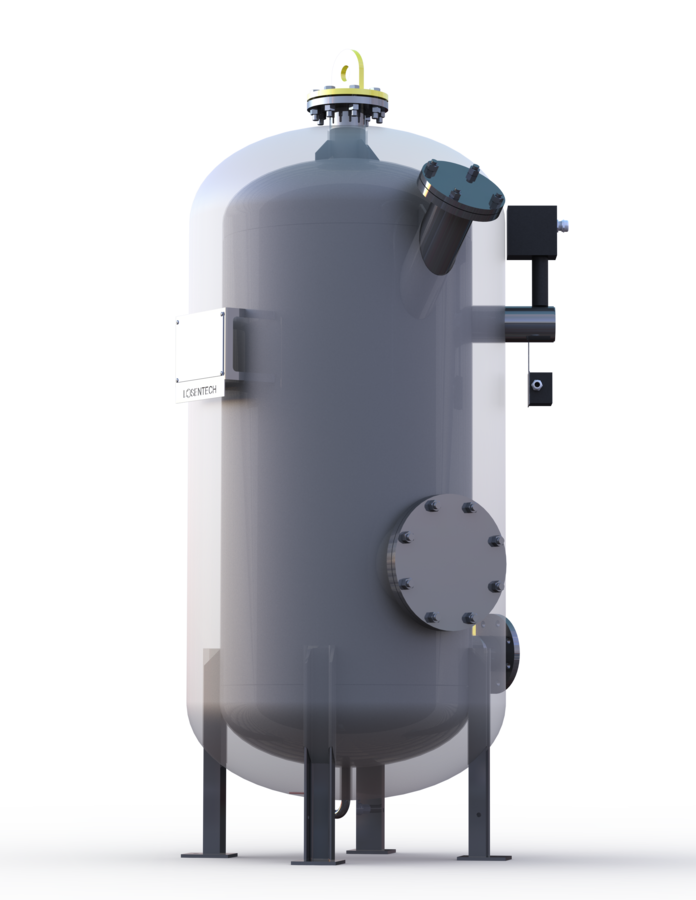



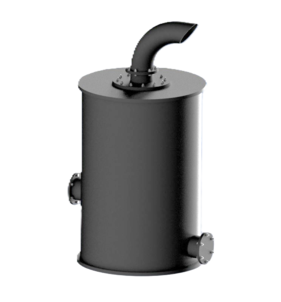
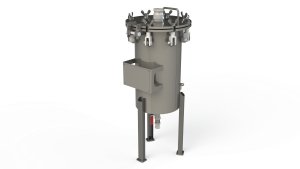
Adsorption columns
Adsorption is a process in which components of a fluid (gas or liquid) are extracted and retained on the external and internal surfaces (within the pores) of a solid material known as the adsorbent. The retention of particles on the surface occurs due to physical and chemical interactions.
The adsorption process is exothermic, and its efficiency depends on temperature, pressure, and the presence of other components in the system.


Adsorbers are equipped with an adsorbent bed, which—depending on the application—may consist of:
- Activated carbon (derived from wood, coal, or coconut shell),
- Silica-based adsorbents,
- Zeolites, molecular sieves, silica gel,
- Oxide adsorbents, such as alumina (Al₂O₃),
- Impregnated sorbents, e.g., for carbon dioxide (CO₂) adsorption.
Adsorbers and adsorption units are manufactured from a range of construction materials, including:
- Carbon steel,
- Alloyed and acid-resistant stainless steel,
- Polypropylene (PP), polyethylene (PE), and thermoplastic weldable sheets (TWS) for corrosive applications.
Optional equipment includes:
- Electric heating for heat loss compensation (including ATEX-rated solutions),
- Thermal insulation,
- Gas pressure and temperature monitoring,
- Concentration measurement,
- Bed temperature monitoring for detection of potential hot spots.
We also supply adsorbers designed for operation in explosion hazard zones in compliance with ATEX directives.